

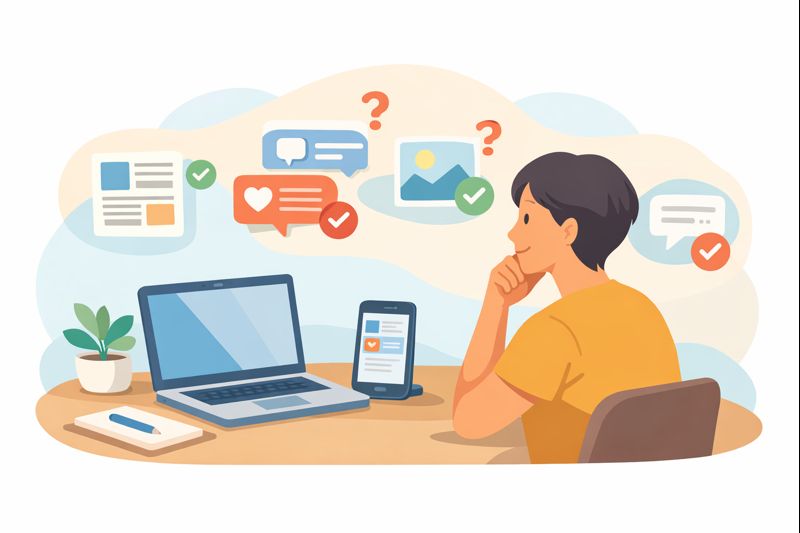
Every day, we read news, posts, videos, and messages online. Some of them sound convincing. Others look professional and well-written. Yet many people still pause and ask, “Is this actually true?” That question is exactly why learning how to evaluate online information for accuracy has become an essential skill. kind of like learning to look both ways before crossing the street. It’s about being smart and safe.
For beginners and everyday users, the internet can feel overwhelming. Anyone can publish content, share opinions, or post claims within seconds. As a result, accurate information often sits side by side with misleading or incomplete content. This does not mean the internet is unreliable, but it does mean we need better habits when reading online.
This guide explains how to fact-check online information without special tools or technical knowledge. By the end, you’ll know how to pause, evaluate, and decide what deserves your trust. To begin, let’s understand why online information can be so confusing in the first place.
Why Online Information Can Be Misleading
Online content spreads fast. People share posts quickly, sometimes without checking them. Others may oversimplify facts, remove context, or focus on attention-grabbing headlines.
Several common reasons cause confusion:
- Information gets copied without verification
- Headlines exaggerate the main point
- Opinions get presented as facts
- Old information resurfaces without updates
None of this requires bad intentions. Often, mistakes happen because speed matters more than accuracy online. Knowing this helps us approach information calmly instead of assuming everything is either true or false. With that understanding, let’s look at the first habit you should build.
Fact-Checking Routine
Think of these steps as your personal checklist. You don’t need to use every single one for every post, message, or video you see online. However, running through just a few of them can help you avoid believing or sharing information that isn’t accurate. With that in mind, let’s walk through the steps one by one.
Pause before you react or share
The first step is simple, but powerful: pause.
Online content, often seems to trigger quick reactions. When something surprises you, excites you, or worries you, slowing down for a moment gives your brain time to catch up.
Example: You read an article claiming a popular app is shutting down tomorrow. Instead of sharing it immediately, you pause and ask, “Who is reporting this?”
Example: A WhatsApp message or viral tweet says a new school rule starts tomorrow. Before forwarding it to a group chat, you stop and think, “Where did this information come from?”
That short pause creates space for better judgment. Once you slow down, the next step is to look at who shared the information.
Check the source carefully
Every piece of information comes from somewhere, and the source matters. Reliable sources usually make it clear who they are and where their information comes from. Unclear or hidden sources deserve extra caution.
Examples:
- An article appears on a site with no author name, no contact details, and no “About” page. That doesn’t automatically mean it’s false, but it does mean you should double-check it elsewhere.
- An Instagram post makes a strong claim but comes from an account with no bio, no links, and no clear identity. That’s a sign to be careful before trusting the post.
Separate facts from opinions
Facts and opinions often appear together online, which can be confusing. Facts are things that can be checked. Opinions reflect personal beliefs or feelings.
Facts usually:
- Can be verified elsewhere
- Include data, dates, or direct statements
- Stay consistent across sources
Opinions usually:
- Use emotional language
- Reflect personal beliefs
- May change depending on perspective
Examples:
- “Online learning is better than classroom learning” is an opinion. “According to a national survey, 60% of students preferred online learning in 2023” is a factual claim that can be verified.
- A TikTok video says, “Online exams are unfair and should be banned.” That is an opinion. If the creator includes official announcements or verified statistics, those parts can be checked as facts.
Recognizing this difference helps you read content more clearly. Once you separate facts from opinions, the next step is to confirm the information elsewhere.
Look for Confirmation From Other Sources
Accurate information rarely exists in only one place. Before trusting a claim, search for it on at least one or two other reputable websites. If multiple independent sources report the same thing, accuracy becomes more likely.
Examples:
- A blog claims a nationwide policy change affects all students. You check major news outlets or official education websites to see if they report the same update.
- A Facebook post announces a major rule change. Before believing it, you search for confirmation on official government or school pages.
If several independent sources say the same thing, the information becomes more reliable. After that, it’s important to check when the information was published.
After confirming across sources, the next thing to check is timing.
Check the date and context
Old information can become misleading when shared as if it’s new. Always check when the content was created and whether the situation has changed.
Example:
- An article from several years ago about online exams may no longer reflect current policies.
- A screenshot of a post goes viral on X, but the original post is from years ago. Without checking the date, it’s easy to mistake it for current news.
Once timing and context are clear, pay attention to how the message is written.
Watch the language being used
The words used in a post often reveal how carefully it was written.
Be cautious of content that:
- Uses extreme phrases like “always” or “never”
- Promises instant solutions
- Sounds overly dramatic or urgent
Example:
A headline saying, “This change will destroy education forever,” is likely exaggerating.
Example:
A post claims, “This one trick will fix everything schools are doing wrong.” Language like this often signals opinion or exaggeration rather than solid evidence.
Calm, balanced language usually points to more thoughtful content. Even so, visuals can still be misleading, which brings us to the next step.
Don’t let images or headlines fool you
Images and headlines are designed to grab attention. Sometimes they exaggerate or oversimplify the message.
Helpful habits:
- Read beyond the headline
- Check whether images match the story
- Be careful with cropped screenshots
Example:
- A dramatic headline suggests a shocking discovery, but the article itself explains many limitations and uncertainties.
- A cropped image shared on Instagram looks alarming. When you search for the full image, you discover it was taken out of context.
Reading beyond the surface helps prevent misunderstandings. After reviewing all these factors, you can decide how much trust to place in the information.
Decide how much trust to give the information
Not everything online is completely true or completely false. Some information is incomplete or unclear.
After checking the source, facts, confirmation, timing, language, and visuals, ask yourself:
Is this reliable enough to believe or share?
Example:
- If an article lacks clear sources and confirmation, you may choose not to rely on it.
- After reviewing a viral video, you still feel unsure. Choosing not to share it is often the most responsible decision.
With practice, these steps become natural habits rather than extra work.
Healthy Social Media Habits for Everyday Users
Frequently Asked Questions
1. Is all online information unreliable?
No. Many sources provide accurate information, but checking helps confirm it.
2. Do I need special tools to verify information?
No. Simple searching and careful reading are enough for most cases.
3. What if experts disagree online?
Disagreement happens. Look for consensus and credible explanations.
4. Is it okay to trust familiar websites?
Yes, but even familiar sources can make mistakes. Occasional checking still helps.
5. Should I correct others online when they share misinformation?
It depends. Sometimes sharing accurate sources calmly works better than arguing.
Conclusion: Accuracy Starts With Awareness
Learning how to evaluate online information for accuracy helps you navigate the internet with confidence instead of confusion. The goal isn’t to doubt everything, but to read with awareness and care.
By pausing, checking sources, separating facts from opinions, and confirming information, you protect yourself from misunderstandings and unnecessary stress. These skills matter not just online, but in school, work, and daily life.
In the next guide, we’ll explore how to build healthy digital habits that support focus, learning, and well-being in a world full of information.

Leave feedback about this