

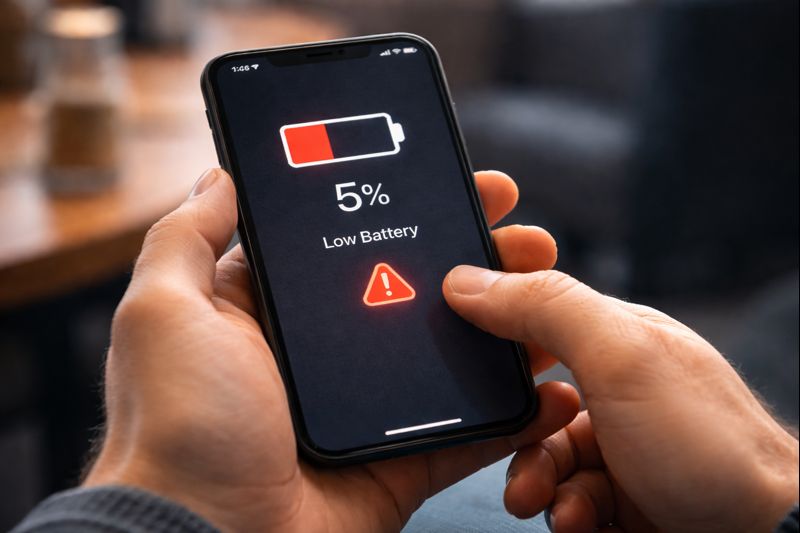
We’ve all been there. You’re out with friends, navigating a new city, or just scrolling through your favorite app when you see it—the little battery icon in the corner of your screen has turned red. Suddenly, everything changes. Your plans shift, your mood dips, and you find yourself scanning the room for an outlet like a detective on a mission. That moment when low battery controls human behavior is something most of us now recognize in our daily lives. It’s more than just an inconvenience, it’s a modern experience that shapes how we move, think, and interact.
Why does a simple device notification hold so much power over us? And what does it say about our relationship with technology, and with each other? In this article, we’ll explore the quiet ways a dying battery influences our choices, stresses us out, and even changes how we socialize. Let’s start by understanding what’s really happening in those low-battery moments.
What Happens When Your Battery Dips Below 20%?
It’s fascinating how a number on a screen can trigger such an immediate reaction. For many, that 20% mark isn’t just a suggestion but a signal to act. But why this specific threshold? And what goes on in our minds when we see it?
Smartphone makers didn’t choose the 20% warning at random. It’s calculated to give users enough time to find a charger before the device shuts down unexpectedly. But over time, this warning has taken on a psychological weight of its own. Think of it like a fuel light in your car, seeing it flash doesn’t mean you’re stranded yet, but it shifts your focus entirely toward finding a gas station or checking your wallet.
In our daily lives, this looks like:
- Cutting a conversation short to “save battery”
- Skipping one more photo because your phone is at 12%
- Feeling a pang of anxiety when you realize you forgot your charger
- Making detours to cafes or stores just to plug in
These might seem like small things, but together they paint a picture of how a technical limitation can steer our behavior. It’s not just about the phone dying, it’s about what we fear we’ll lose when it does. That fear is worth exploring a bit more.
The Real Cost of a Dying Battery: More Than Just Inconvenience
When we talk about low battery controlling human behavior, we’re not just talking about hunting for outlets. The effects ripple through several aspects of our lives, often in ways we don’t immediately recognize.
The social shift
Have you ever been in a group where someone announces, “I’m at 5%, gotta go”? That statement often acts as a social cue, either ending gatherings or shifting them to locations with charging options. Our phones have become social lifelines, and when that lifeline is threatened, our social behavior adapts. We might choose meet-up spots based on outlet availability rather than ambiance, or cut visits short to ensure we have enough battery for the journey home.
The stress factor
That low-battery warning triggers a genuine stress response for many people. Researchers have even given it a name: “low battery anxiety.” Multiple sources, including a widely-cited 2016 ESET study, report that nearly 90% of smartphone users experience anxiety when their battery hits 20%. This isn’t just annoyance, it’s a real physiological reaction that can increase cortisol levels (our primary stress hormone) and distract us from whatever we’re doing.
The decision-maker
Perhaps most interesting is how a low battery becomes a decision-making tool. Faced with limited power, we suddenly prioritize what’s “worth” our remaining battery life. Do we check maps or post to social media? Do we take that video-call or save the battery for later? Our phone, which usually offers endless options, suddenly forces us to choose, and those choices reveal what we truly value in the moment.
These effects show that our relationship with battery life is more emotional than practical. But why has this become such a universal experience? To understand that, we need to look at what our phones have come to represent.Why We
Panic: What’s Really at Stake?
The anxiety isn’t really about the device itself, it’s about what the device connects us to. In our increasingly digital world, a dead phone can feel like being cut off from essential parts of life.
Connection = security
For many, especially students and young adults, smartphones are the primary tool for maintaining social connections, accessing information, and even ensuring physical safety. Think about using ride-sharing apps, navigating public transit, or contacting someone in an emergency. When the battery dies, that safety net feels suddenly fragile. A 2021 Pew Research study found that a significant number of adults, particularly younger users, are ‘smartphone-dependent,’ relying on their devices as essential tools for social connection and logistical tasks.
The fear of missing out (FOMO)
This isn’t just a trendy acronym, it’s a real psychological phenomenon amplified by low battery warnings. When your phone dies, you’re not just offline; you’re potentially missing messages, updates, invitations, or moments you can’t get back. That anxiety about disconnecting, even temporarily, drives much of our low-battery behavior.
Identity and routine
For better or worse, our phones hold pieces of our identity like photos, notes, playlists, and apps that reflect who we are and how we live. Losing access to that, even briefly, can feel disorienting. Our daily routines often revolve around our devices, so a dead battery doesn’t just stop our phone, it disrupts our rhythm.
Understanding these stakes helps explain why that red battery icon carries so much weight. But rather than just accepting this anxiety, we can develop healthier habits. Let’s explore some practical ways to take back control.

Practical Tips for Battery Peace of Mind
The good news is that we’re not helpless against low-battery anxiety. With a few simple habits, you can reduce the frequency of those panic moments and feel more prepared when they do happen.
1. The morning charging ritual
Make charging part of your daily routine, like brushing your teeth. Plug in your phone every night in the same spot—perhaps on a bedside table or desk. Consider this your “battery insurance” for the day ahead.
2. Know your battery’s personality
Every phone battery behaves a bit differently. Notice when yours drains fastest (often during video calls, gaming, or using GPS). Once you understand your phone’s “appetite,” you can plan better. For example, if you know you’ll be using maps for an hour, or having a long video-call, charge up beforehand.
3. The portable power solution
Investing in a portable charger (power bank) can be a game-changer. You don’t need the biggest or most expensive one, even a small, lightweight model that fits in your bag can provide enough charge to ease anxiety. Think of it as a digital safety net.
4. Optimize your settings
A few simple tweaks can extend your battery life significantly:
- Reduce screen brightness
- Turn off Bluetooth and Wi-Fi when not in use
- Enable “Low Power Mode” when you hit 20%
- Close apps running in the background
These small changes can add precious hours to your battery life without limiting your phone’s usefulness.
5. The mental shift
Sometimes, the healthiest response is to embrace the low-battery moment. Instead of panicking, try viewing it as an opportunity: a chance to be present, to observe your surroundings, or to have an uninterrupted conversation. The world won’t end if you’re offline for an hour, in fact, you might enjoy the break.
Developing these habits creates a healthier relationship with your device, one where you’re in charge, not the battery percentage. Now let’s address some common questions people have about this phenomenon.
How to Balance Tech and Life: A Beginner’s Guide
Conclusion
Our journey through the world of low battery controlling human behavior reveals something important about our modern lives. That red battery icon isn’t just a technical warning—it’s a mirror reflecting how intertwined our daily routines, social lives, and even our emotions have become with our devices.
The goal here isn’t to make you feel guilty or suggest you ditch your phone. Technology is wonderful when it serves us rather than stresses us. By understanding why we react to low battery warnings, and by taking simple steps to prepare, we can transform that moment of panic into one of preparedness, or even opportunity.
Next time you see that 20% warning, take a breath. Remember that you have strategies, you have options, and you have control over how you respond. Your phone is a tool, not a taskmaster. With a little awareness and preparation, you can ensure that you’re guiding your technology, not the other way around.


Leave feedback about this