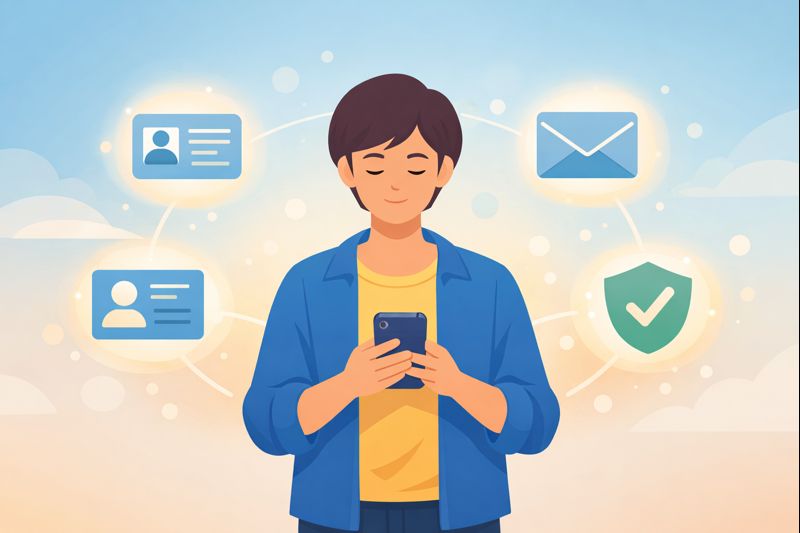
If you’ve followed our recent discussion, we explored how passwordless login is making our digital lives more convenient. But what if I told you that’s just the beginning? Passwordless gets you through the door, but what about everything you need to do once you’re inside? Today, we’re looking at something bigger: your digital identity, and how it could transform not just how you log in, but how you prove who you are across the entire internet.”
Think of it this way: Passwordless login is like getting a super-secure key to your front door. Your digital identity is like everything you carry in your wallet: your driver’s license, your library card, your gym membership, all in a secure digital format on your phone. It’s the next step in making your online interactions smoother, safer, and more in your control. Let’s break down what that could look like in your everyday life.
What Is Online Identity?
Online identity is the collection of information that represents you on the internet. It’s how systems know who you are and what you’re allowed to access. This identity can include:
- Your email address or username
- Profile details
- Login history
- Verification details, like phone numbers or IDs
It’s important to separate identity from login methods. A password or passkey is just one way to prove your identity. The identity itself is the digital version of “you” that exists across platforms.
Understanding this difference helps explain why online identity is changing. Before we look at the future, let’s see how identity works today.
How Online Identity Works Today
Most people already use online identity systems every day, even if they don’t think about them. Each time you log in to an app, sign up for a service, or use one account across multiple websites, an identity system is working in the background.
To understand how this works, it helps to look at the most common model used today. This model is built around a small number of trusted companies that manage identity on behalf of users.
Centralized identity providers
Many websites rely on large companies to handle identity. Examples include logging in with an email account or a social media profile. In this setup:
- One company stores and manages your identity
- Other websites trust that company to confirm who you are
This makes signing in easy, but it also means a lot of information is controlled in one place. That convenience explains why this model became popular, but it also raises questions about privacy and control.
To reduce friction and limit repeated sign-ups, another approach developed.
Federated login and shared identity
Federated login lets you use one account across many services. For example, signing in with an existing account instead of creating a new one each time. This approach:
- Saves time
- Reduces password overload
- Creates linked identity trails across services
Privacy experts have noted that while federated identity improves convenience, it can also increase data sharing between platforms. Reports from Consumer Reports and BBC Technology have highlighted how identity sharing affects user privacy.
These systems work well today, but they are not the final step in how identity may evolve. That leads us to newer ideas gaining attention.
Why There’s a Growing Push for Digital IDs
Right now, proving who we are online is a bit of a mess. We’ve all been there: you sign up for a new app, and it asks you to create yet another login. Soon, you’re juggling dozens of passwords, using the same one for multiple sites (which isn’t very safe), or constantly hitting “forgot password.”
This system isn’t just inconvenient for users; it also creates attractive targets for attackers. When companies store large databases of login and identity details, those systems become valuable breach targets. According to reporting from The Guardian and The Wall Street Journal, major data breaches involving names, email addresses, birthdates, and other identity information have increased awareness of how valuable digital identity data has become.
Let’s break down the mechanics of a digital ID into simple, everyday steps.
Life Without Passwords: How Passwordless Login Works
How a digital ID could work in everyday life
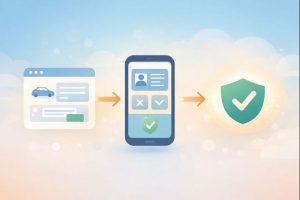
Let’s use a common example: renting a car online. Today, you have to enter a ton of personal details such as your full name, address, driver’s license number, and credit card info into the rental company’s website.
With a digital ID, the process could look very different:
- You Initiate: You go to the car rental site and click “Book with your Digital ID.”
- Get a Request: A pop-up from your secure digital ID app (on your phone) asks, “Do you want to share your driver’s license info and a payment method with CarRental Co.?”
- You Control What’s Shared: You see exactly what information is being requested. You click “Share,” but only the specific, necessary details are sent.
- Get Verified: The rental company instantly gets a verified, cryptographically sealed confirmation that you are a licensed driver, without ever storing your actual license number. Your booking is complete.
The beauty is in the control and the reduction of risk. The rental company gets only what they need, and your sensitive data isn’t sitting in yet another company’s database, waiting to be hacked. This concept of “selective disclosure” is a game-changer for privacy.
So, if this is the potential, what would the average person notice changing in their daily digital routine?
What this could change for everyday users
If digital IDs become widespread, here are a few ways your online experience might get smoother and safer:
- Fewer password-related frustrations: Imagine logging into banks, government services, or social media with a quick tap on your phone using biometrics (like your fingerprint or face) instead of recalling a complex password.
- Faster, Safer Online Services: Need to open a bank account, apply for a government permit, or verify your age for a delivery? These could be done in minutes from your couch, with far less paperwork and far more security.
- More Control Over Your Data: You could see a clear dashboard of which companies you’ve shared information with and revoke that access anytime, like taking back a key.
- Reduced Identity Fraud: Since your core identity is harder to steal and spoof, scams where someone pretends to be you to get loans or credit could become much rarer.
Of course, such a big shift doesn’t come without important questions and concerns, which we absolutely need to address.
Are Smart Devices Listening to You? What the Evidence Shows and How to Protect Your Privacy
Frequently Asked Questions
1. Is online identity the same as logging in?
No. Logging in is one way to prove identity, but identity itself is broader.
2. Will digital IDs replace passwords completely?
Not immediately. Different systems will coexist for some time.
3. Are digital identities safe?
They can be, especially when designed with privacy protections.
4. Do users lose control with digital identity systems?
Some models increase control, while others require careful oversight.
5. Should everyday users worry about online identity changes?
Awareness is useful, but panic is unnecessary.
Conclusion
So, where does this leave us? The future of online identity isn’t about creating a futuristic version of ourselves or replacing everything we use today. Instead, it’s about improving how identity works behind the scenes to reduce friction, limit unnecessary data sharing, and give users clearer control.
Rather than spreading copies of personal information across countless websites, digital identity systems aim to let people prove specific facts about themselves only when needed. That shift could make everyday online tasks simpler, from signing up for services to accessing important platforms, while also reducing the risks that come with storing sensitive data in many places.
These changes won’t happen all at once, and different systems will likely exist side by side for some time. What matters most is understanding the direction things are moving. As online identity continues to evolve, being informed helps you make better choices about the tools you use and the information you share.
By learning how digital identity works and why it’s changing, everyday users can approach the future of the internet with more confidence and less uncertainty. The goal isn’t perfection, but progress toward an online experience that feels easier to use, more respectful of privacy, and better aligned with real-world needs.
Leave feedback about this