
Hey there! Have you ever checked your bank statement and wondered, “Where is all my money going?” You’re not alone. Many of us sign up for a helpful app, a fun caller tone, a short message service from a service provider, or a streaming platform with the best intentions — only to forget about it months later. Those small, forgotten charges are what I like to call subscription leaks: tiny recurring fees that quietly add up and drain your bank account without you noticing.
It’s a modern money mystery. The problem usually isn’t one big purchase, but several small ones working silently in the background. The good news is that with a bit of awareness and a simple approach, you can spot these leaks and stop them. Let’s walk through how to find them and take back control, one small subscription at a time.
What Exactly Is a Subscription Leak?
Let’s break it down. A subscription leak isn’t a dramatic, one-time fraud. It’s much quieter than that. Imagine your monthly income as a bucket of water. Subscription leaks are like tiny holes in that bucket. Each hole may only let out a few drops, but together, they can leave the bucket almost empty before you notice.
In simple terms, a subscription leak is any recurring charge for a service you no longer use, no longer need, or don’t even remember signing up for. It might be a free trial you forgot to cancel, the premium version of an app you used once for a short project, or a streaming service you replaced with a newer one but never turned off.
Understanding what a subscription leak looks like makes it easier to spot one, so let’s look at a few everyday examples next.
Common Examples of Sneaky Subscriptions
- The Forgotten Free Trial: “7 days free” quietly turns into “$14.99 per month” because life got busy and the reminder slipped by.
- The App Upgrade: You needed extra features for a week, but the $4.99 monthly charge is still running a year later.
- The Digital Magazine or Box: You enjoyed the first issue, but unread copies keep piling up in your inbox or on your doorstep.
- The Duplicate Service: You signed up for a new music or video service but never canceled the old one.
These charges often feel too small to worry about — $3 here, $9 there. But as you’ll see next, they create a steady drip-drip-drip effect that slowly adds up over time.
How a Few Small Charges Create a Big Problem
It’s easy to shrug off a $7.99 charge. But what if you have five of those? Or ten? The math becomes startlingly clear when you add it up.
Let’s say you have just four common leaks:
- A forgotten cloud storage plan: $9.99/month
- An unused fitness app: $14.99/month
- A magazine subscription you never read: $5.99/month
- An old TV streaming service: $12.99/month
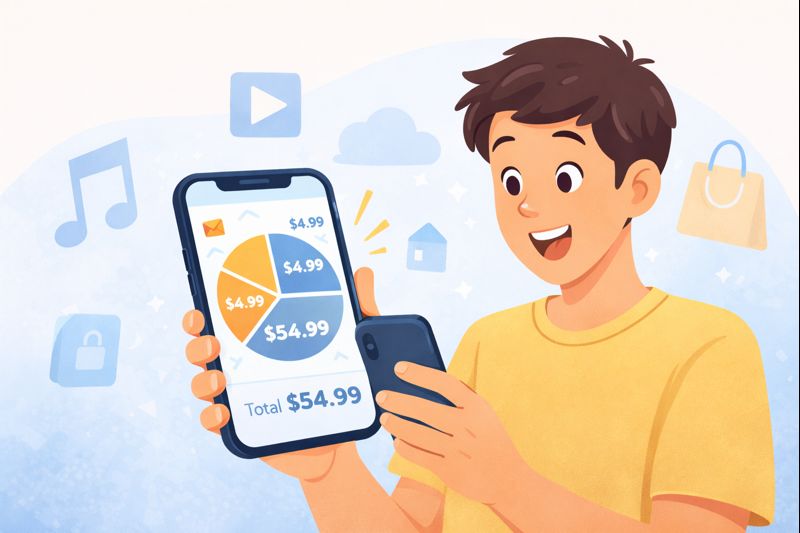
That’s $43.96 every single month. In a year, you’ve spent $527.52 on things you aren’t using. That’s enough for a new gadget, a nice weekend trip, or a big chunk of a savings goal—just vanished.
The real issue is automation. These payments happen in the background, on your credit card or through your phone’s app store, with no active decision required from you each month. It’s the ultimate “set it and forget it” system, and unfortunately, we often forget.
This is why being proactive is so important. Now, let’s roll up our sleeves and find where your money is quietly slipping away.


Your Step-by-Step Guide to Finding Subscription Leaks
Don’t worry — you don’t need to be a finance expert or a tech whiz to do this. Think of it as a simple 60-minute detective mission for your own wallet. All you need is a little time and attention. Here’s your game plan.
Step 1: Become a statement detective
Start by opening your last three to four months of bank and credit card statements. You can usually find these in your banking app or online account. Slowly scan through the list of transactions and look for:
- Familiar company names like Netflix, Spotify, or Adobe
- Vague or shortened labels (for example, “APL” or “AMZ,” which may refer to Apple or Amazon services)
- Repeating amounts that appear every month without change
Pro tip: Use the search feature in your banking app. Try keywords such as subscription, membership, premium, inc, or LLC. This often brings hidden recurring charges to the surface.
Once you’ve reviewed your statements, it’s time to check the places where subscriptions usually hide.
Step 2: Check the usual suspects
Some platforms are common hiding spots for recurring payments. Take a few minutes to review these:
-
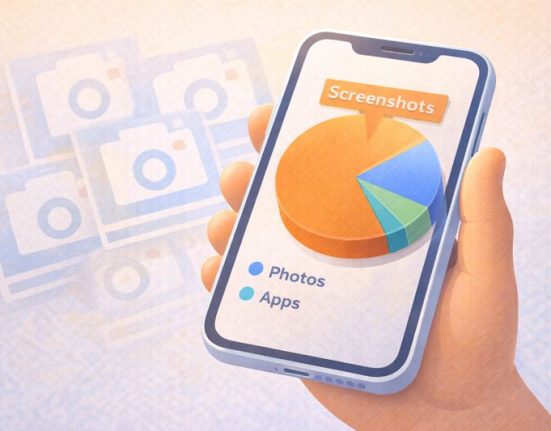
Your phone’s app store
-
iOS: Settings → Your Name → Subscriptions
-
Android: Google Play Store → Profile icon → Payments & subscriptions → Subscriptions
-
-
Your PayPal account
Check the Automatic Payments or Recurring Payments section. -
Your email inbox
Search for phrases like renewal, subscription receipt, or your monthly charge.
This step often reveals subscriptions people completely forgot about, which makes the next step much easier.
Step 3: Create your “subscription inventory”
As you find subscriptions, write them down. A simple notes app or piece of paper works just fine. Create three columns:
-
Service name: What is it?
-
Monthly cost: How much does it charge?
-
Verdict: Keep, Cancel, or Maybe
Seeing everything listed in one place is powerful. What once felt invisible now becomes clear and manageable.
Once your list is complete, the next step is deciding which subscriptions truly deserve a place in your monthly budget.
To keep or to cancel? making smart choices
Facing your list can be surprising. The goal isn’t to cancel everything in a panic, but to make intentional choices. Ask yourself these simple questions about each subscription:
- Do I actually use this? Be honest. When was the last time you logged in or opened the app?
- Does it bring me value or joy? Is that streaming service your main source of relaxation? Does that productivity app genuinely help you work? If yes, it might be worth keeping.
- Is there a cheaper plan? Do you really need the “premium family” plan for just yourself? Can you downgrade to a basic tier?
- Could I replace it with something free? Is there a free version, a library service (like Libby for audiobooks), or a one-time purchase alternative?
Example: Let’s say you have three music services. Maybe you only actively use one. Canceling the other two could save you $25/month instantly. Or, you might realize you use a cloud storage service every single day—that’s a keeper!
This process is about aligning your spending with your actual life. And remember, you can often re-subscribe later if you miss a service. Now, let’s talk about how to protect yourself from future leaks..
How to Guard Against Future Subscription Creep
Stopping leaks is great, but preventing new ones is even better. Here are a few painless habits to adopt:
- The Calendar Trick: When you start a free trial, immediately put a cancellation reminder in your calendar for 2 days before the trial ends. This gives you time to decide without the pressure of an impending charge.
- Use a Dedicated Payment Method: Consider using a single credit card or a pre-paid debit card for all your subscriptions. This makes them incredibly easy to track in one place.
- Do a Quarterly “Subscription Check-Up.” Every 3-4 months, spend 15 minutes reviewing your statements. It’s like a regular financial check-up to catch any new leaks early.
- Read Before You Click “Agree.” Skim the terms before signing up. Know the regular price, the billing date, and how to cancel.
Adopting just one or two of these habits can save you from future headaches and keep your financial bucket nice and full. To show you’re not alone in this, let’s look at how common this issue really is.
You’re Not Alone: The Scale of the “Subscription Economy”
This isn’t just a personal problem; it’s a widespread trend. A 2025 report by McKinsey & Company highlighted that the average household manages dozens of subscriptions. More importantly, people consistently underestimate how much they’re paying for them each month.
Another study, like the 2022 “Subscription Momentum” report from Recurly, found that while consumers love subscription services, managing them is a top pain point. Many people admit they continue paying for things they don’t use simply because canceling feels like a hassle.
These reports aren’t meant to scare you, but to reassure you. Forgetting about a subscription isn’t careless—it’s a common side effect of our digital lives. The power comes from knowing how to manage it.
Let’s address some of the most common questions people have when they start this process.
Frequently Asked Questions (FAQs)
Q1: What if I don’t recognize a company name on my statement?
A: Don’t panic! Search the exact charge name and amount online. Often, forums and websites are dedicated to helping people identify mysterious charges. You can also call your bank—they can often provide more details about the merchant.
Q2: I’m scared to cancel something I might need later.
A: That’s a fair worry. Remember, in most cases, you can re-subscribe anytime. If you haven’t used it in 3 months, cancel it. You can always sign up again if you find you truly need it.
Q3: Is it hard to cancel subscriptions?
A: It varies. By law, companies should make it as easy to cancel as it was to sign up. Look for the “Account” or “Billing” section of the service’s website. If you can’t find it, a quick web search for “how to cancel [Service Name]” usually provides clear steps.
Q4: Can I get a refund for a charge I just noticed?
A: Sometimes, yes! It never hurts to ask. Contact the company’s customer support, be polite, and explain you forgot about the subscription and would like to cancel and request a refund for the most recent charge. They often will, especially if it’s your first time asking.
Q5: Will doing this mess up my credit score?
A: No. Canceling a subscription service you pay for monthly has no direct impact on your credit score. Your score is affected by things like loan and credit card payments, not streaming services.
Conclusion
Tracking down subscription leaks is one of the simplest and most effective ways to give your finances a quick, positive boost. It doesn’t require a drastic lifestyle change or deep financial expertise—just a bit of focused time and honesty with yourself.
The goal is mindfulness, not deprivation. It’s about ensuring your money is going toward the things you truly value, rather than silently trickling away to services that no longer serve you. By plugging these leaks, you’re not just saving money; you’re making a conscious choice about how you want to spend it.
So, why not grab your most recent bank statement and start your detective mission today? You might be amazed at what you find—and what you can save.